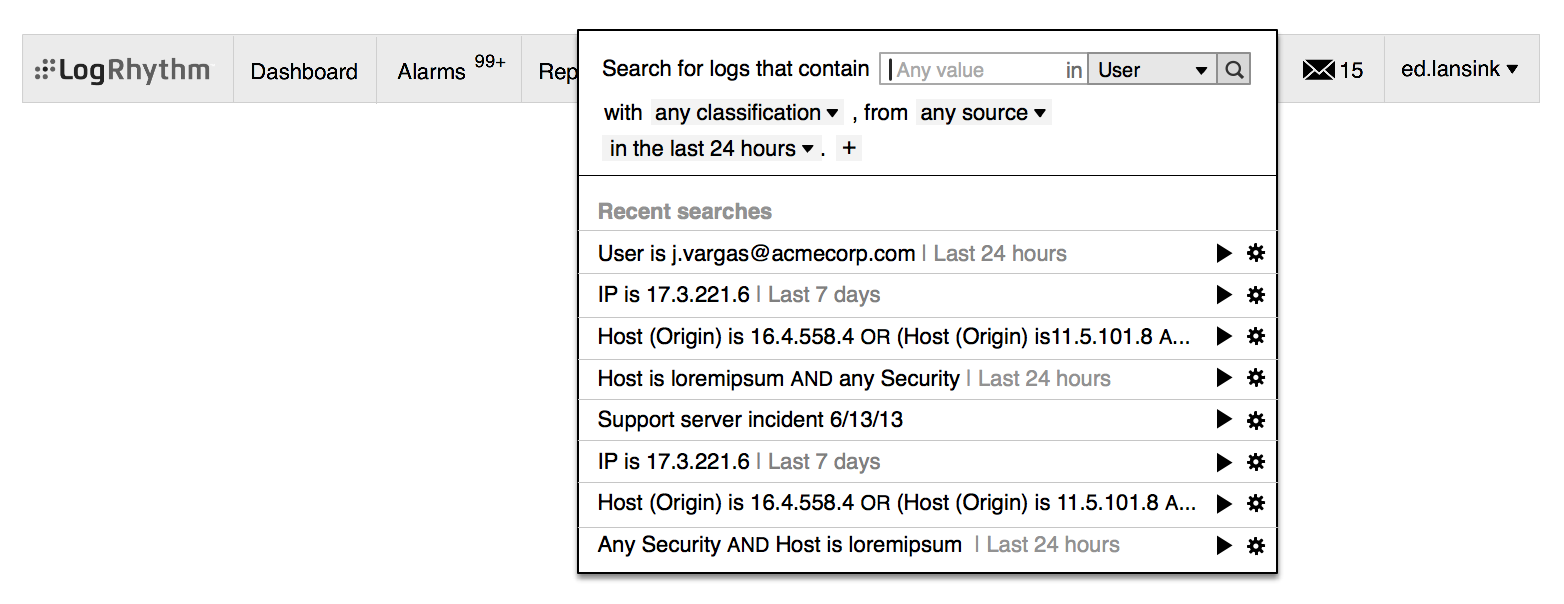
LogRhythm helps organizations detect, investigate and respond to cyber threats. It had proven there was a market need and demonstrated its technical capability, but struggled to craft a product that users would embrace. Its flagship software was powerful but hard to use, resulting in stagnating sales and significant support costs.
My redesign turned it into an award-winning product, with a world-class user experience that balances power, efficiency and intuitiveness.
Working closely with the LogRhythm team (CTO, VP of Product and developer) over the course of 9 months (and 90+ design reviews and 450+ cups of coffee), I led the UX overhaul of a complex enterprise product, from the vision & concept down to the micro interactions.
Enterprise applications are tough but rewarding design challenges that require a thorough understanding of the problem space; surface-level improvements alone won’t have a meaningful impact on users’ productivity or the company bottom line.
So I started by immersing myself in the domain, business, product, users and their challenges. I had many conversations with stakeholders, SMEs and end users. Along the way, I sketched diagrams of key roles, flows, objects, actions and painpoints, to validate and assure shared understanding of the problem space.
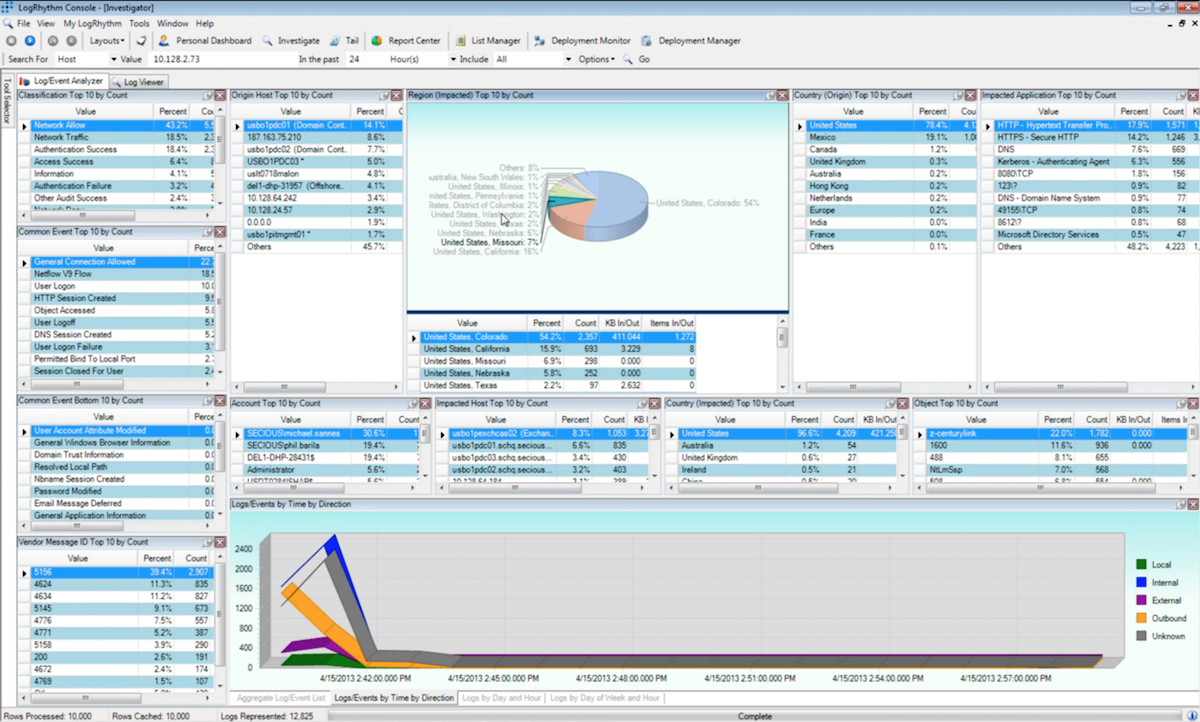
A picture emerged of a tool that was highly technically capable, but also inefficient and confusing.
Before. One of many screens.
Barriers to adoption included:
To get team buy-in and alignment, I shared and discussed
I synthesized insights into a storyboard to:
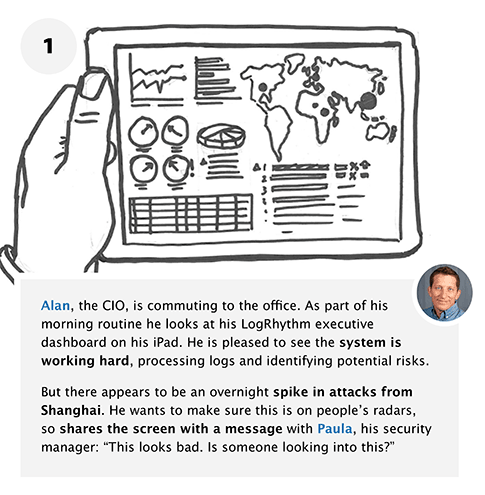
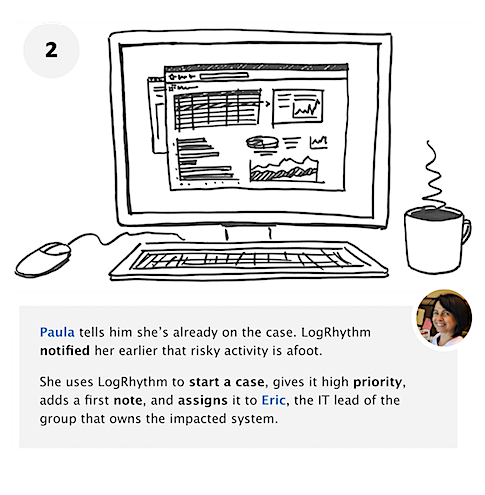
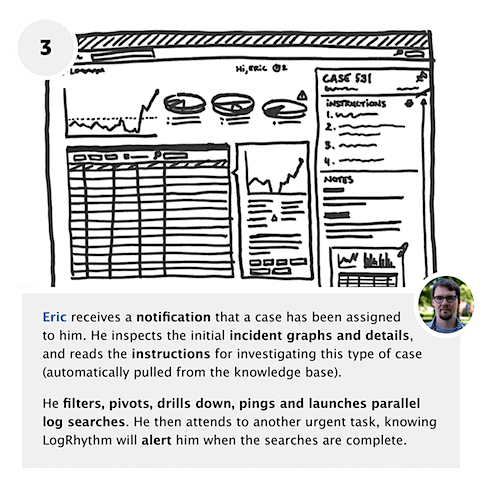
Part of the storyboard, tying together previously fragmented modules, features and roles.
With the high-level concept and vision established, I next focused on the application framework to house the individual modules and global functionality: a whole greater than its parts.
While I hadn’t designed the individual modules yet, I had thought through their outlines and system-level impacts enough to design a resilient application framework that would only require fine-tuning later.
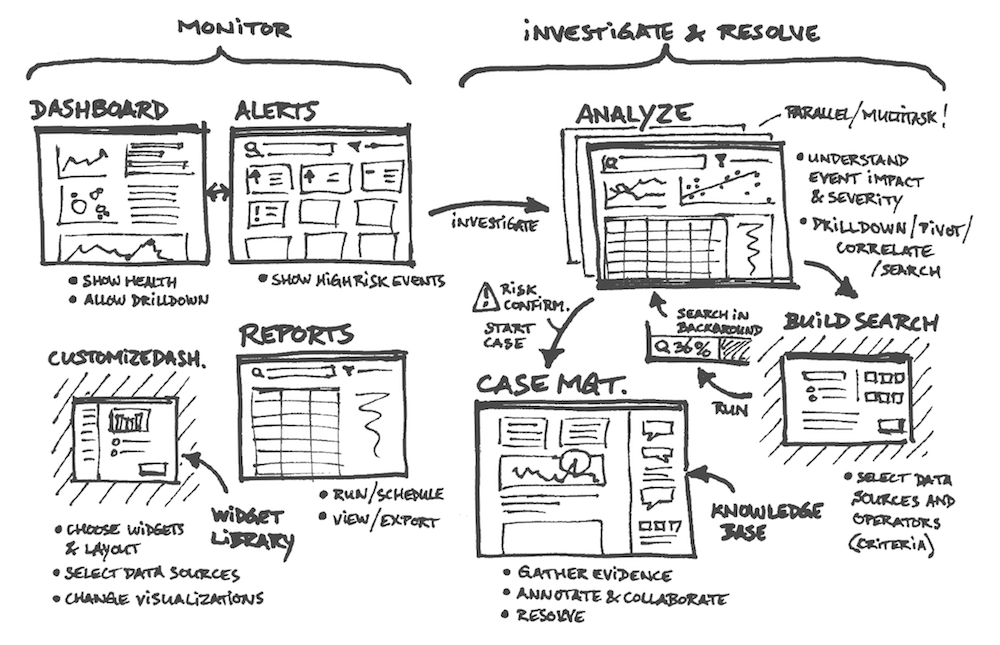
Conceptual model of the new application with the key modules, their relationships and jobs-to-be-done.
I led frequent design reviews - including fierce conversations around balancing user and technical needs - that helped us iterate towards the best product.
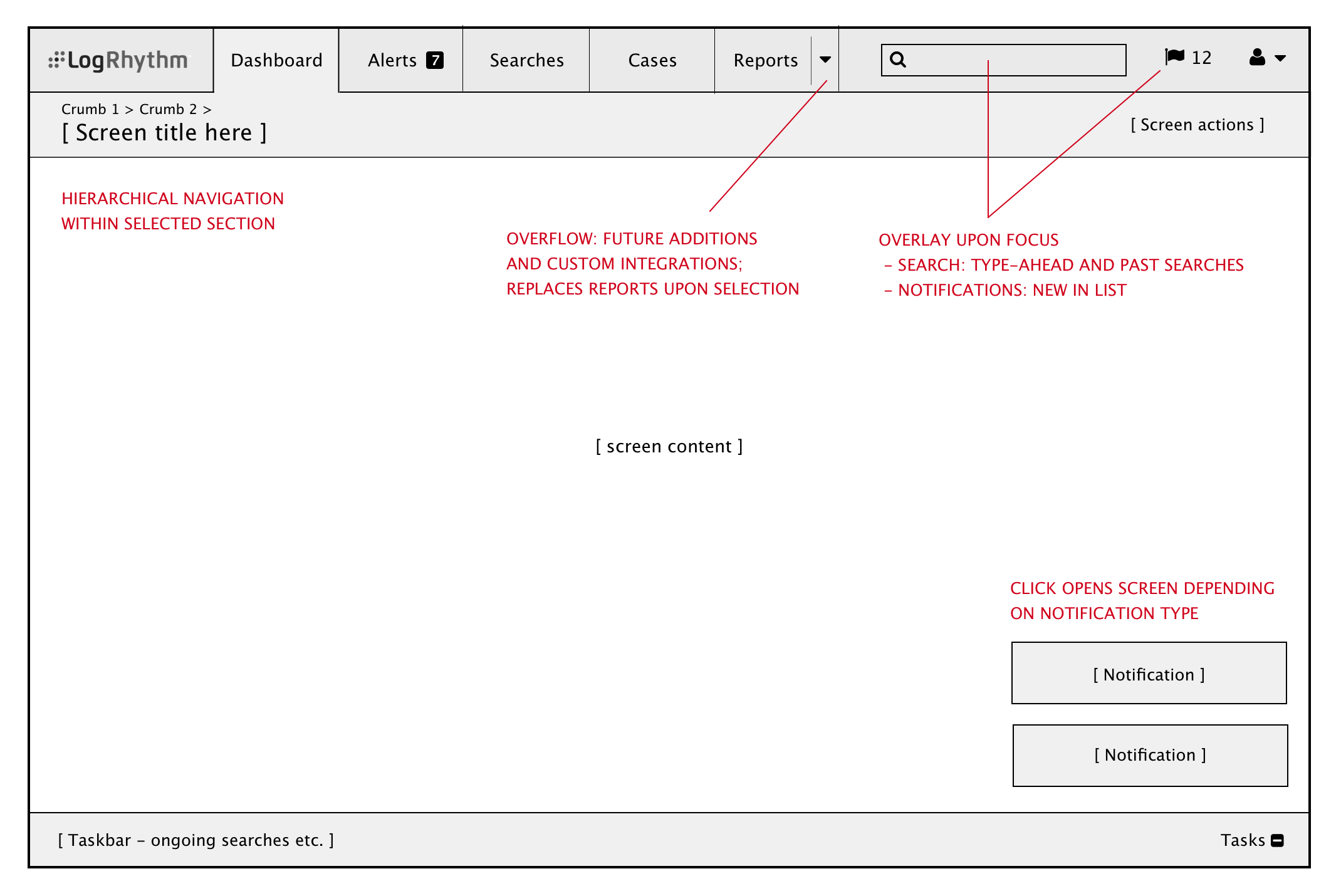
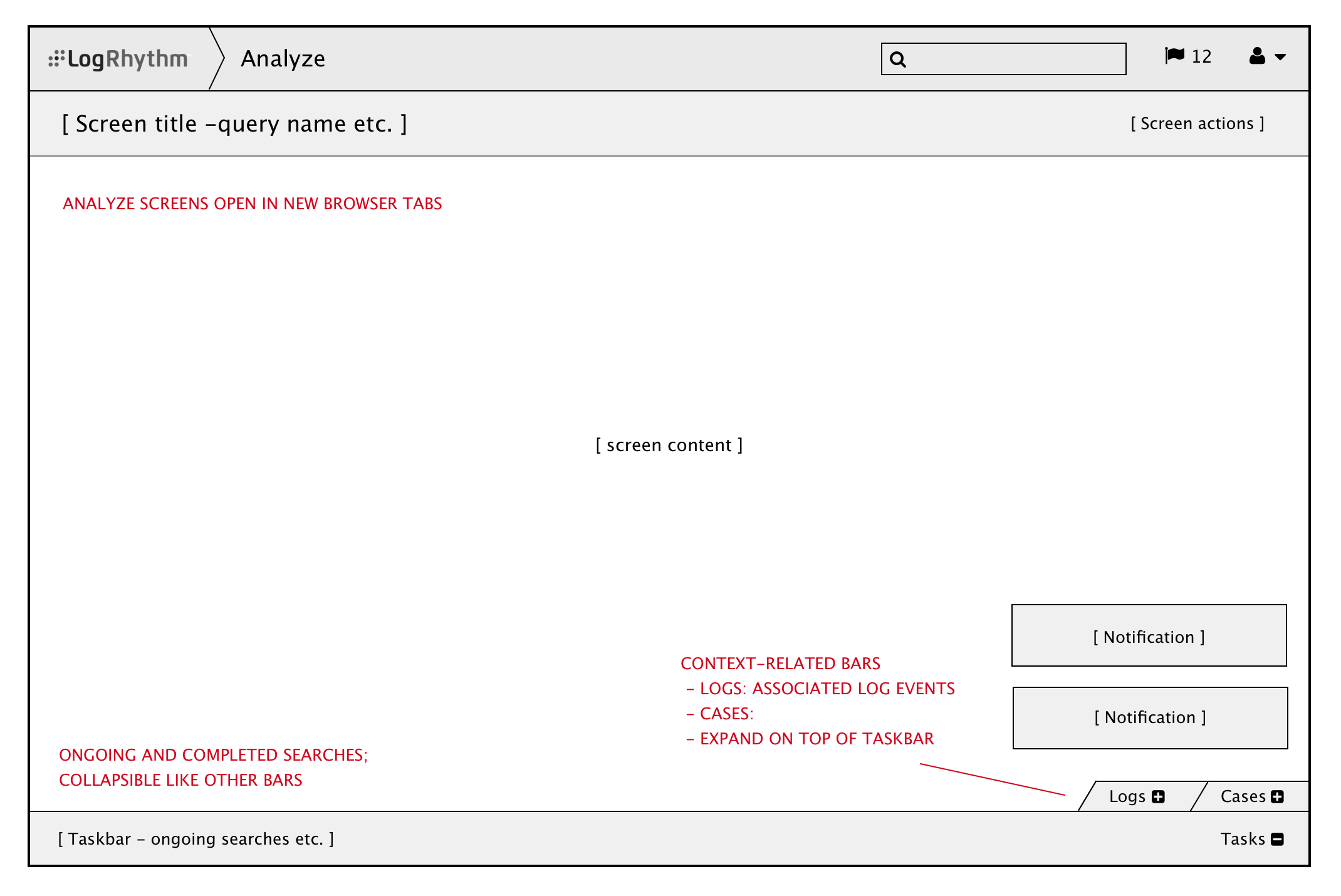
Fleshing out the application framework at screen level: window types with chrome and key functionality.
With the framework in place, I designed the modules one-by-one.
I followed the same approach for each module, iterating towards the best UX through cycles of design and team review, starting at concept level (module’s structure, flows, objects & actions, etc.) before going down to the detail level of screens, controls and micro interactions.
SAMPLE PROTOTYPE: CASE MANAGEMENT
The Case Management module was new, to be designed from the ground up, so I supported that module’s design with additional user research using a low-fi prototype (nowadays I would create it in Figma).
SAMPLE DESIGN CHALLENGE: ADVANCED SEARCH
When the system detects a threat, the user starts an investigation into the cause and impact. This often involves advanced searches through hundreds of thousands of log events across dozens of systems.
Despite the urgent and critical nature of these investigations, power users told me that they found the existing search process inefficient and cumbersome, while other users simply found it incomprehensible.
It was clear that the search UX would be critical to the success of the redesign, and that it would need to balance enterprise-level functional sophistication with near walk-up-and-use simplicity. (You know it’s a complex domain when something like this is considered the “Simple Search” module.)
Users’ struggles with advanced search centered around two areas:
After considering possible existing solutions (such as Apple playlist rules; too limited) and concepts from a previous project (not a great fit), I designed a visual approach to put the power of Boolean queries within reach of many more users, but the team was hesitant; it was going to be a big conceptual change and they were concerned if it would still meet the needs of power users and support all scenarios.
I felt strongly that this would be a great solution, so I took extra steps to get the team to buy in.
First, to make it easier for the team to fully grasp the proposed solution and feel comfortable with it, I increased fidelity. (Thinking grows more conservative when uncertainty increases, so I wanted to provide as much clarity as possible.) I put together an interactive prototype showing step-by-step how a query is built, illustrated here:
Buiding a Boolean query.
Second, to address the concerns around supporting power users and their scenarios, I requested data logs of actual queries run by their customers. I broke those down into query types and was able to show that the design would be able to handle them all.
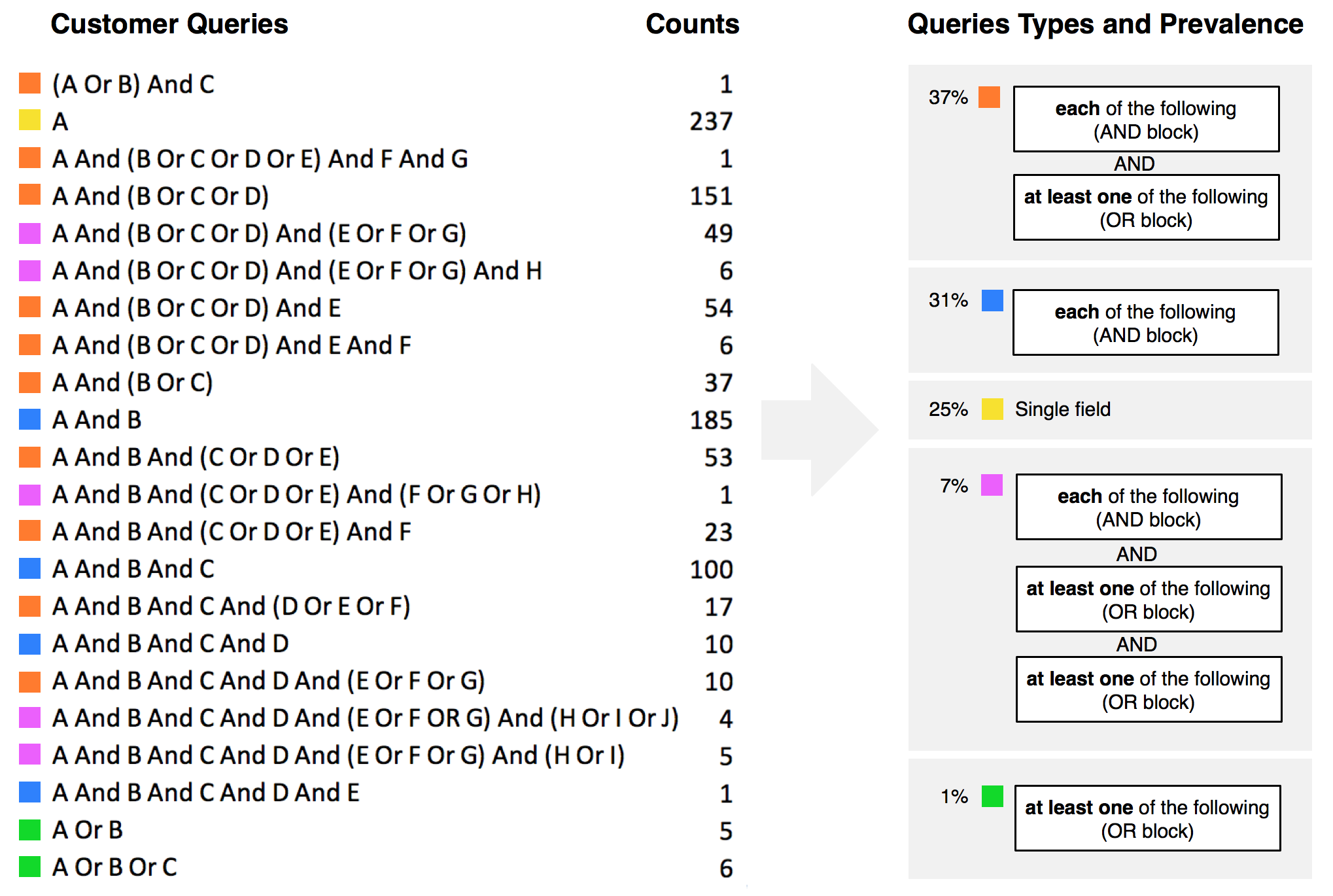
Analysis to help make the case for the proposed design.
Through these efforts I was finally able convince the team to build it, which they did and it was very well received in the user feedback sessions I ran and upon launch.
I also designed a way for users get faster insights into first results, so they could start taking action and consider adjusting the query if wasn't producing the right results.

First search results accessible through the taskbar.
As with the other modules, I worked with a visual designer to ensure that the aesthetics would not only increase desirability, but enhance comprehension and productivity.
As with the other modules, I worked closely with the developer to create bullet-proof specs for implementation.
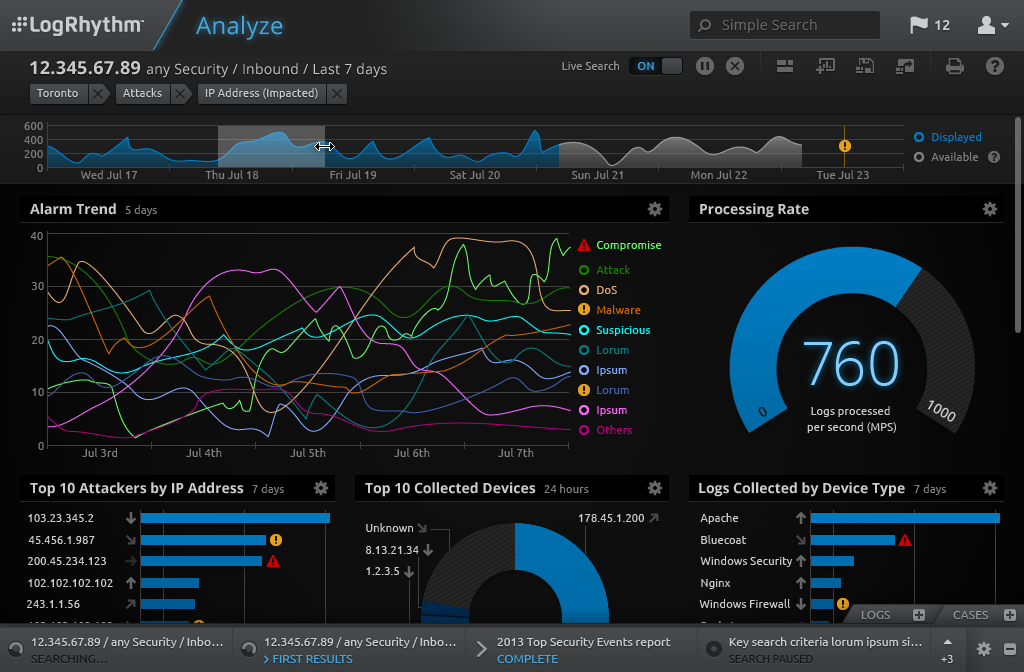
The result was award-winning product with a world-class user experience that balances power, efficiency and intuitiveness.
"Damon worked extensively on our user
experience for critical areas of the product. He was skilled at working in our technical
domain
[and] understood the balance of user needs, business objectives, and technical feasibility."
- Chris Brazdziunas, VP of Product at LogRhythm